Washington (CNN) — An Amazon Air cargo plane that careened off the runway in Miami last month didn’t touch down until it was nearly ¾ of a mile past the threshold and the captain didn’t attempt to abort the landing until there was only 930 feet of pavement remaining, the National Transportation Safety Board revealed Thursday.
The preliminary report sheds new light on how an unstable landing at too high of a speed turned deadly.
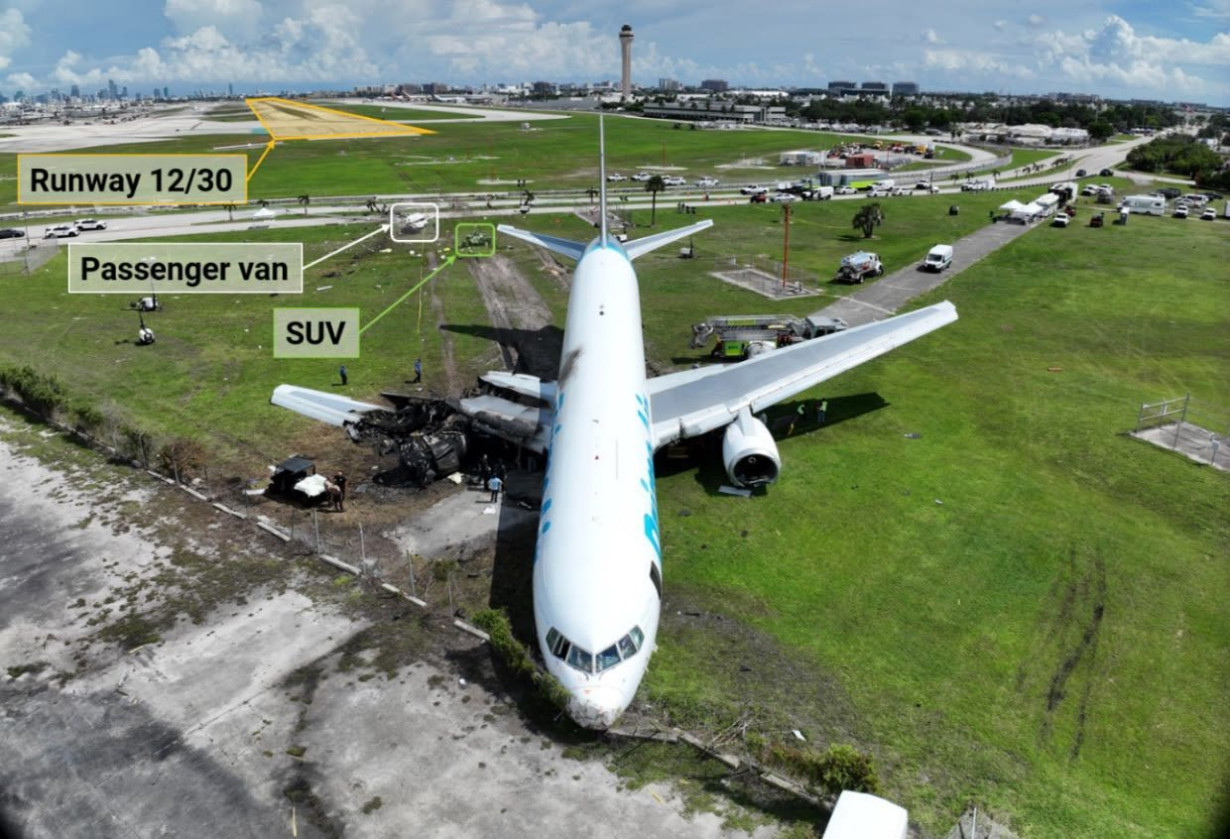
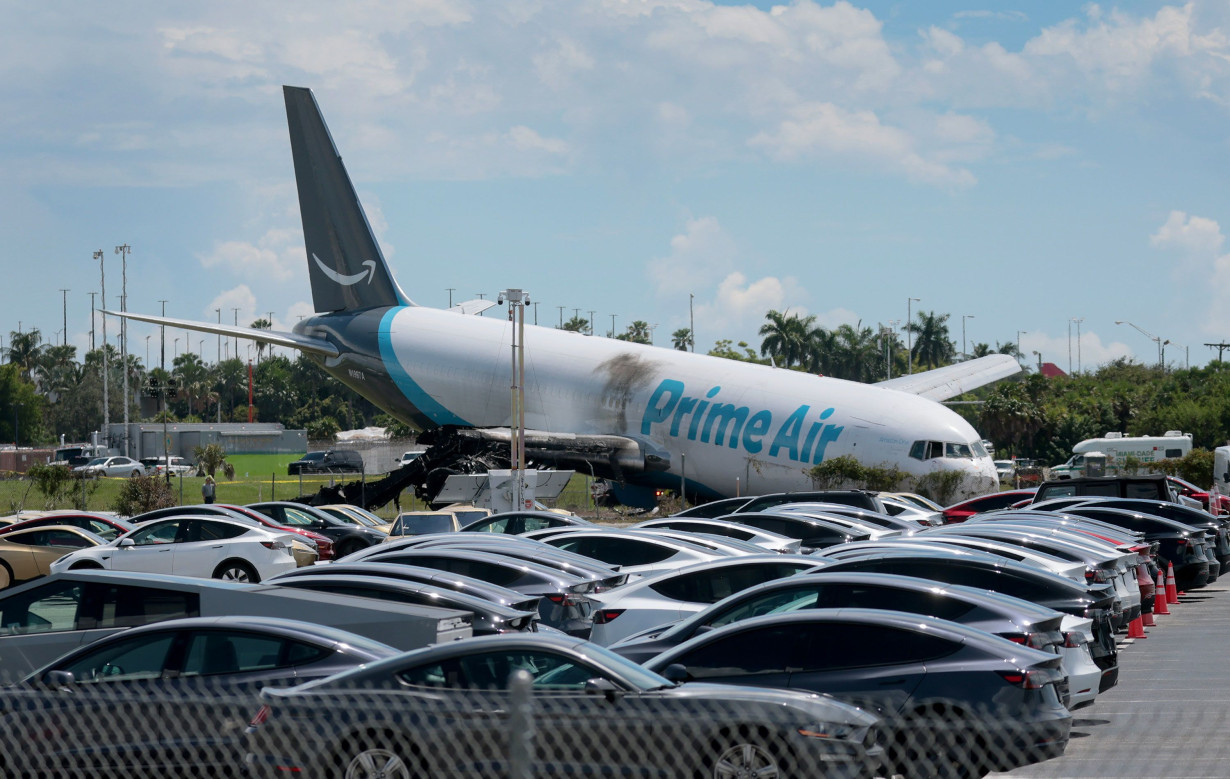
Five people were killed when the Boeing 767, operated by all-cargo carrier 21Air, overran the runway at Miami International Airport on September 6, striking multiple vehicles, catching fire and sending a thick black plume of smoke into the air. Three people sustained serious injuries, and the two pilots had minor injuries, the NTSB said.
The report also identifies, for the first time, that it was the captain who was flying the Boeing 767 and the first officer who repeatedly warned him the jet was coming in too fast. There was “not a consistent verbal response” from the captain to the warnings about speed, investigators said.
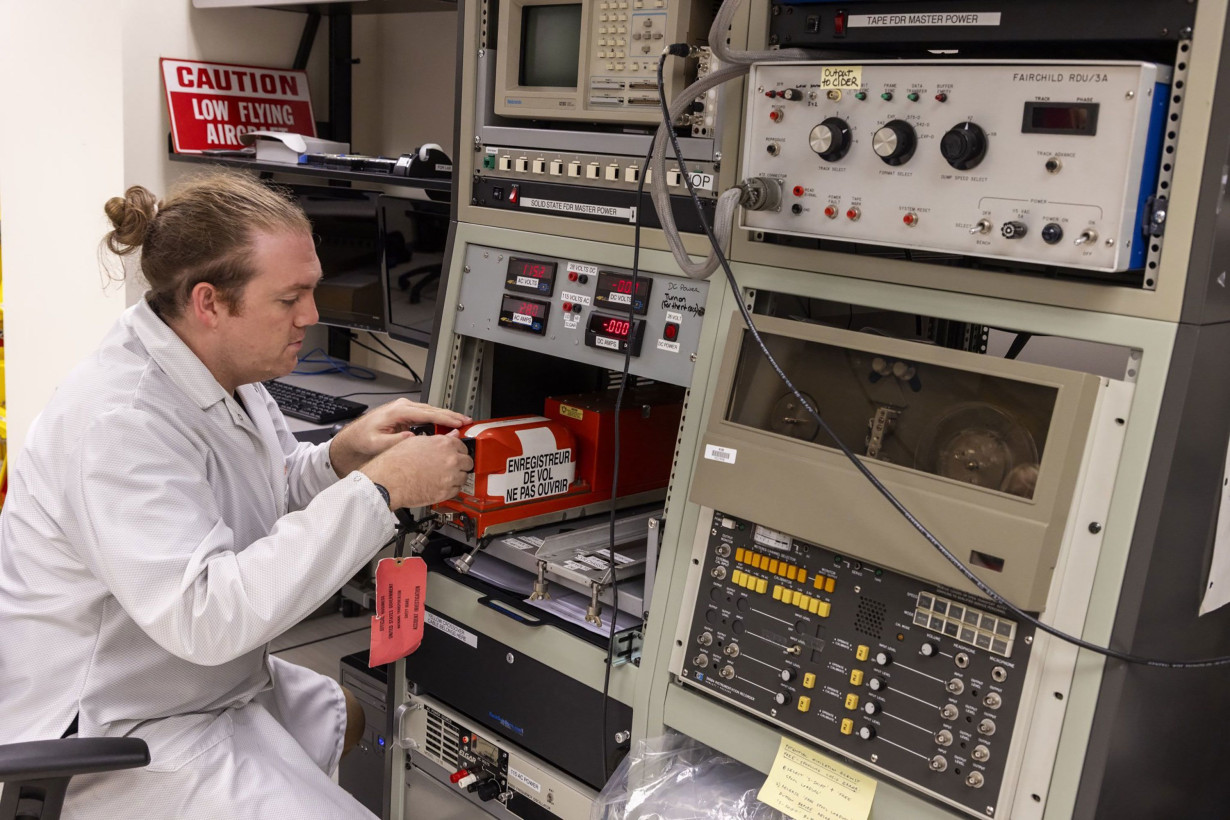
The plane was about 105 feet above the ground and going more than 200 mph as it crossed the threshold of the runway, according to tracking data and the aircraft’s black box, the NTSB said.
The plane flew past 40% of the runway before it finally touched down about 3,750 feet beyond the start of the pavement going about 185 mph. Another 2,880 feet were gone before the plane’s weight was entirely on the ground.
Black box data and the position of the controls in the cockpit show the speed brakes and thrust reversers, which redirect air to slow the plane, were not used.
The pilot did apply the wheel brakes but took his feet off the pedals and called for a “go around” to abort the landing with less than 1000 feet of runway left. Four seconds later, he resumed trying to stop, but it was too late.
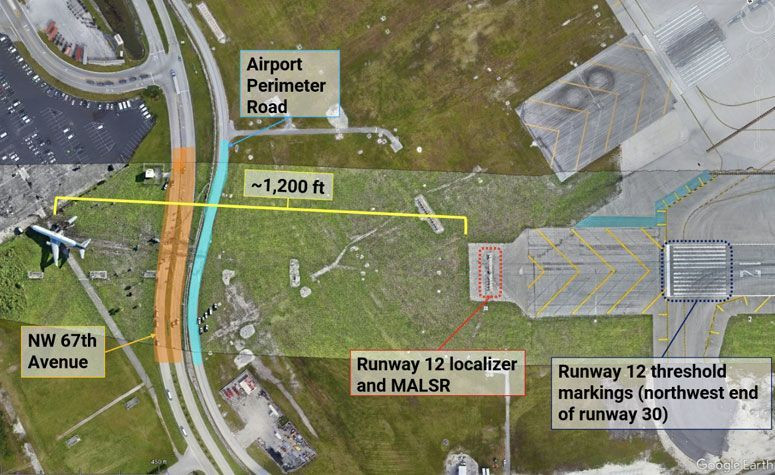
The plane rolled past the departure end of the runway and struck navigation equipment and airport lights at about 115 mph. It hit a Ford Econoline passenger van, where five people were killed, and then a Toyota Corolla Cross SUV before finally erupting in flames about 1,200 feet beyond the end of the paved surface, the NTSB said.
The pilot jumped out of the aircraft from the left door while the first officer climbed out a cockpit window.
The plane, the pilots and air traffic control
The September 6 flight from San Juan, Puerto Rico, to Miami was the third flight of the day for the plane and second for the pilots flying it.
The captain had 7,267 total hours of flight experience, but only 150 hours in the Boeing 767, investigators said. The first officer had 2,800 total hours of flight experience and 800 hours in the 767.
The air traffic controller handling the flight in the control tower at the time of the crash had only been on duty for 17 minutes when the crash happened, the NTSB said. They had a total of 11 years experience and were certified in 2019 to cover this part of Miami International Airport.
Investigators said the controller did not give the pilots information about the wind when they cleared the plane to land, as required. An FAA order, noted by the NTSB, requires both wind direction and velocity to be stated when authorizing the use of a runway when tailwinds exist.
The plane was landing to the north west and winds at the time of the crash were from the south around 20 MPH and gusting to 30 MPH.
21Air, which operated the plane for Amazon Air, said it was reviewing the preliminary report and is working closely with the NTSB on the investigation.
“Our focus since the accident has been on supporting everyone affected, to include providing resources to those who were injured, the loved ones of those who lost their lives, and our colleagues and commercial partners,” a statement from 21Air said. “We will take all appropriate action to improve our safety based on the facts as they are established.”
Amazon Air suspended its operations with 21Air after the crash.
The NTSB has not yet identified the cause of the accident, which usually takes more than a year to determine.
The probe is focused on identifying what happened and why. It does not assign blame or any sort of criminal liability, instead focusing on preventing an accident from ever happening again.
The-CNN-Wire
™ & © 2026 Cable News Network, Inc., a Warner Bros. Discovery Company. All rights reserved.